
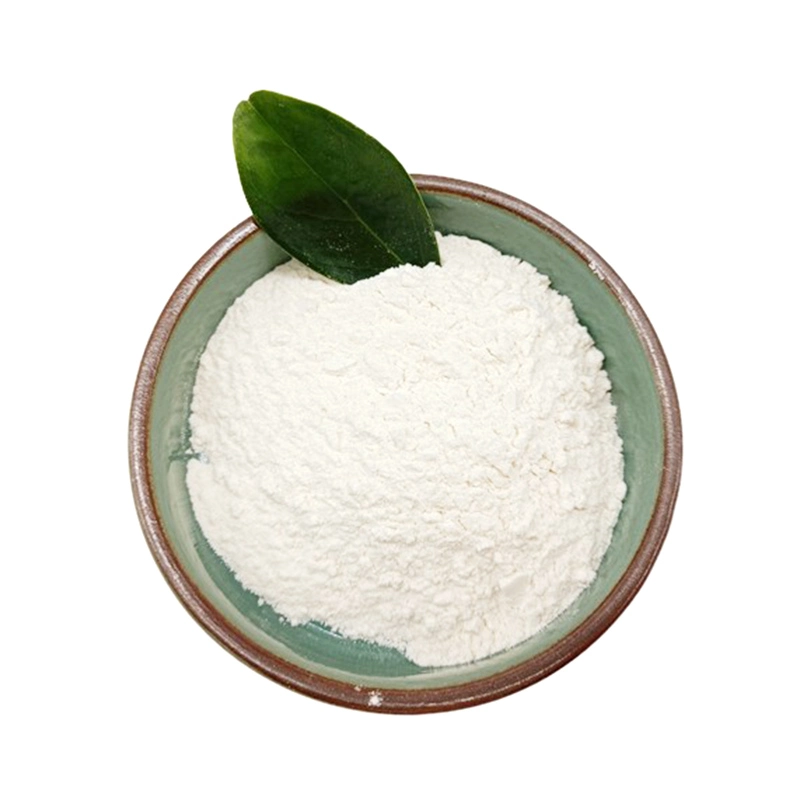
Products Description of Chlorhexidine CAS#55-56-1
Chlorhexidine is commonly used in oral care to help prevent and manage a variety of oral infections. Its applications include the treatment of gingivitis, including acute necrotizing ulcerative gingivitis, oral infections following dental surgery, and oral infections associated with conditions such as cancer and leukemia. It may also be used to manage stomatitis and denture-related follicular stomatitis caused by bacterial or fungal microorganisms.
Beyond its oral health applications, Chlorhexidine is effective in controlling dental plaque and supporting overall oral hygiene. It is also utilized as a disinfecting agent for medical instruments and skin, and may serve as a preservative in certain ophthalmic preparations, including eye drops.
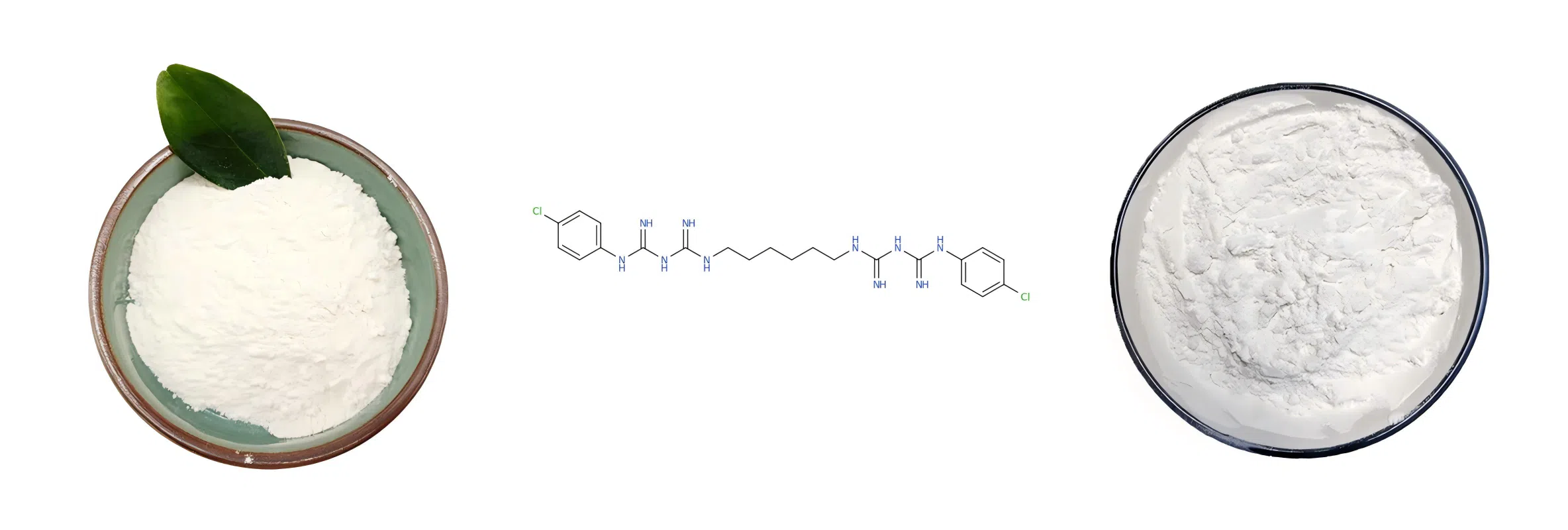
Product Parameters of Chlorhexidine CAS#55-56-1
| Name | Chlorhexidine |
| CAS | No.55-56-1 |
| CID | 9552079 |
| EINECS(EC#) | 223-026-6; 200-238-7; 200-302-4 |
| Molecular Formula | C22H30Cl2N10 (isomer) |
| Inchi | InChI=1S/C22H30Cl2N10/c23-15-5-9-17(10-6-15)31-21(27)33-19(25)29-13-3-1-2-4-14-30-20(26)34-22(28)32-18-11-7-16(24)8-12-18/h5-12H,1-4,13-14H2,(H5,25,27,29,31,33)(H5,26,28,30,32,34) |
| InChIkey | GHXZTYHSJHQHIJ-UHFFFAOYSA-N |
| Canonical Smiles | C1=CC(=CC=C1NC(=NC(=NCCCCCCN=C(N)N=C(N)NC2=CC=C(C=C2)Cl)N)N)Cl |
| Isomers Smiles | C1=CC(=CC=C1N/C(=N/C(=NCCCCCCN=C(/N=C(/NC2=CC=C(C=C2)Cl)\N)N)N)/N)Cl |
| Density | 1.1555 (rough estimate) |
| Melting point | 134-136 °C(lit.) |
| Boiling point | 641.45°C (rough estimate) |
| Refractive index | 1.6300 (estimate) |
| Flash Point | 376.7°C |
| Vapour Pressure | 0.0±1.7 mmHg at 25°C |
| Precise Quality | 564.224 |
| PSA | 204.88 |
| logP | 6.3747 |
| Solubility | 0.08 g/100 mL (20 oC) |
| Appearance | white powder |
| Chemical Properties | Chlorhexidine occurs as an odorless, bitter tasting, white crystallinepowder. |
| Color/Form | Crystals from methanol Solid |
| pKa | pKa 10.78 (Uncertain) |
| Water Solubility | 0.08 g/100 mL (20 oC) |
| Stability | Stable. Incompatible with strong oxidizing agents. |
| StorageTemp | Keep tightly closed. |

Product Application of Chlorhexidine CAS#55-56-1
Chlorhexidine is extensively employed in oral healthcare for the prevention and management of gingivitis, including acute necrotizing ulcerative gingivitis, as well as oral infections that may occur after dental surgery. It is also used to manage oral infections in patients with cancer or leukemia and to treat stomatitis and denture-associated follicular stomatitis resulting from bacterial or fungal infections.
In addition to its oral care applications, Chlorhexidine contributes to dental plaque control and improved oral hygiene. It can also be utilized as a disinfecting agent for medical instruments and skin and as a preservative in ophthalmic preparations such as eye drops.
As a cationic surfactant antimicrobial, Chlorhexidine demonstrates potent broad-spectrum antibacterial and bactericidal properties. It exhibits activity against a wide range of microorganisms, including both Gram-positive and Gram-negative bacteria, supporting its use in diverse antimicrobial and disinfection applications.