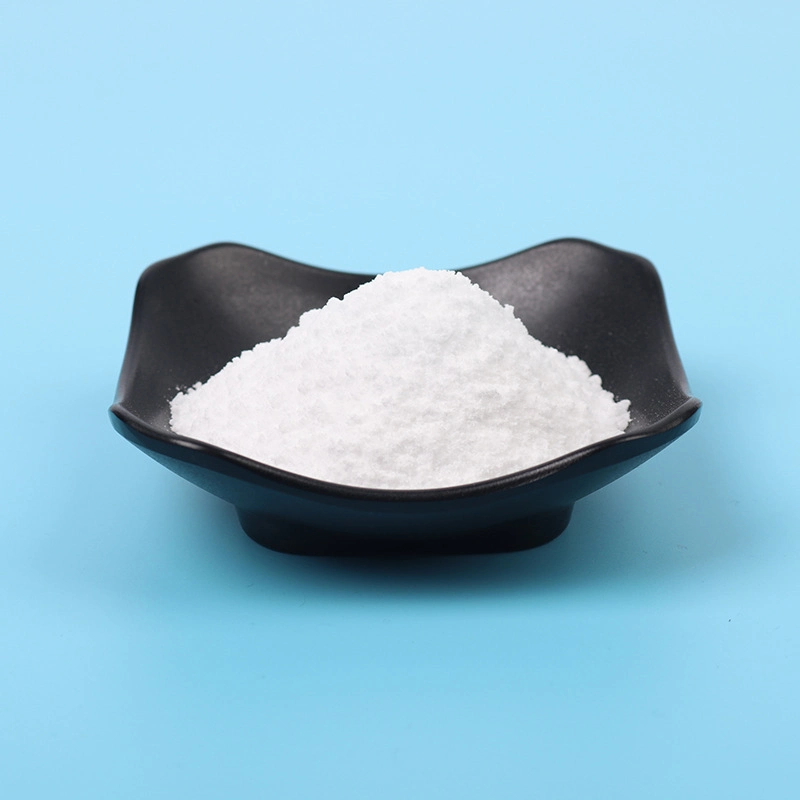
Products Description of Inositol CAS#87-89-8
Myo-Inositol, also referred to as cyclohexanol, hexahydroxycyclohexane, cyclohexitol, or inositol, is a naturally occurring compound commonly classified within the B-vitamin family. Based on the spatial arrangement of its hydroxyl groups around the cyclohexane ring, Myo-Inositol can occur in nine stereoisomeric forms, comprising seven achiral isomers and two optically active forms with opposite configurations.
Myo-Inositol is widely distributed throughout nature and is present in the tissues of both plants and animals in free or bound forms. It is also a natural constituent of animal and plant cells. In the digestive tract, certain microorganisms can synthesize Myo-Inositol, which is involved in the metabolism of carbohydrates and lipids. In animal tissues, it is predominantly found as phosphatidylinositol and occurs in relatively high concentrations in organs and tissues such as the brain, myocardium, and skeletal muscle.
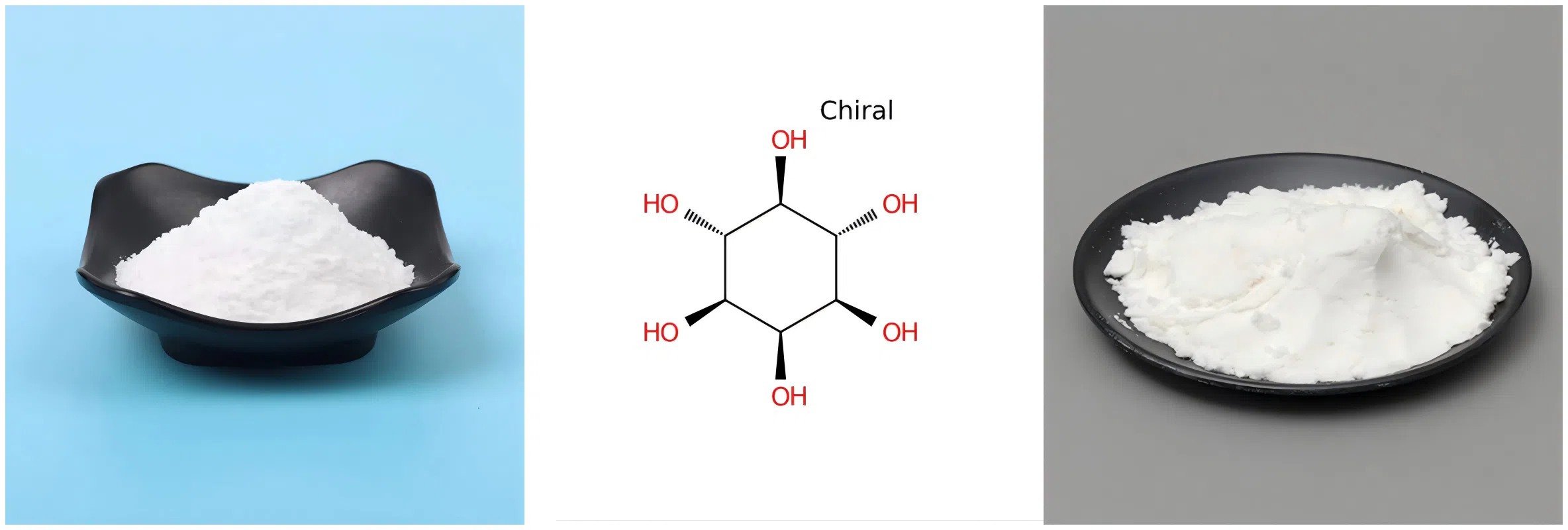
Inositol Chemical Properties
| Melting point | 222-227 °C (lit.) |
| Boiling point | 232.96°C (rough estimate) |
| density | 1.75 |
| vapor density | 6.2 (vs air) |
| refractive index | 1.6170 (estimate) |
| storage temp. | 2-8°C |
| solubility | H2O: 0.5 M at 20 °C, clear, colorless |
| pka | 12.63±0.70(Predicted) |
| form | Crystalline Powder |
| color | White |
| PH | 5-7 (100g/l, H2O, 20℃) |
| Odor | odorless |
| Water Solubility | 14 g/100 mL (25 ºC) |
| Merck | 144978 |
| BRN | 1907328 |
| Stability: | Stable. Combustible. Incompatible with strong oxidizing agents. |
| InChIKey | CDAISMWEOUEBRE-GPIVLXJGSA-N |
| LogP | -2.08 |
| CAS DataBase Reference | 87-89-8(CAS DataBase Reference) |
| NIST Chemistry Reference | Hexahydroxycyclohexane(87-89-8) |
| EPA Substance Registry System | myo-Inositol (87-89-8) |
| Safety Statements | 22-24/25 |
| WGK Germany | 2 |
| RTECS | NM7520800 |
| TSCA | Yes |
| HS Code | 29061390 |

Product Application of Inositol CAS#87-89-8
Myo-Inositol is an important nutritional compound involved in lipid metabolism and various physiological processes. It may support the utilization of certain vitamin preparations and lipid-metabolism-related formulations, while contributing to normal fat metabolism and cellular functions in the liver and other tissues. As a result, it is commonly incorporated into nutritional and health-related formulations designed to support liver and lipid health.
Myo-Inositol is widely used in food and animal nutrition applications. It is frequently included in feed formulations for aquatic species, livestock, and poultry, with typical inclusion levels of approximately 350–500 mg/kg, depending on species and formulation requirements.
In addition, Myo-Inositol has broad applications in the pharmaceutical, food, feed, and chemical industries. It is used in nutritional formulations targeting liver and cardiovascular health and serves as a valuable ingredient in cosmetic and personal care formulations. Its diverse functional properties and broad application potential contribute to its considerable commercial value.