Product Description of Diethyl Carbonate CAS#105-58-8
Diethyl Carbonate (DEC) is a versatile organic compound with a reactive carbonate structure, making it suitable for a wide range of chemical synthesis and industrial applications. It is commonly used as a reagent and intermediate in carbonylation, alkylation, carbethoxylation, and other organic reactions.
As an aprotic solvent with favorable environmental characteristics, DEC offers excellent solvency and formulation properties. It is widely used in the processing of nitrocellulose, cellulose ethers, resins, and other polymeric materials, making it a valuable solvent for coatings, polymers, and specialty chemical applications.
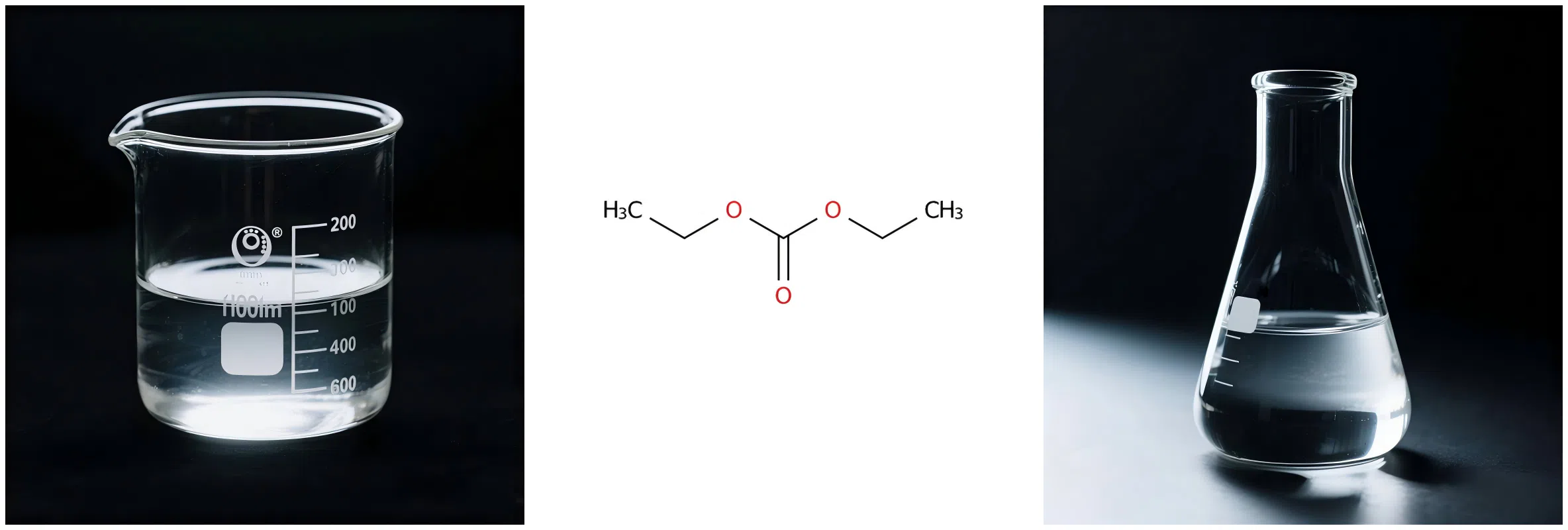
Chemical Properties
| Melting point | -43 °C (lit.) |
| Boiling point | 126-128 °C (lit.) |
| density | 0.975 g/mL at 25 °C (lit.) |
| vapor density | 4.1 (vs air) |
| vapor pressure | 10 mm Hg ( 23.8 °C) |
| refractive index | n20/D 1.384(lit.) |
| Fp | 88 °F |
| storage temp. | no restrictions. |
| solubility | 18.8mg/l insoluble |
| form | Liquid |
| color | Clear |
| Odor | Pleasant, etheral; mild and nonresidual. |
| PH | 6.3 (1g/l, H2O) |
| explosive limit | 1.4-11.0%(V) |
| biological source | mouse |
| Water Solubility | Negligible |
| Sensitive | Moisture Sensitive |
| Merck | 143780 |
| BRN | 956591 |
| Henry's Law Constant | 1.0×10⁻¹ mol/(m3Pa) at 25℃, Burkholder et al. (2019) |
| Dielectric constant | 2.8(Ambient) |
| Stability: | Stable. Flammable. Incompatible with strong acids, strong bases, reducing agents, oxidizing agents. Protect from moisture. |
| InChI | 1S/C5H10O3/c1-3-7-5(6)8-4-2/h3-4H2,1-2H3 |
| InChIKey | OIFBSDVPJOWBCH-UHFFFAOYSA-N |
| SMILES | O=C(OCC)OCC |
| LogP | 1.21 at 25℃ |
| Surface tension | 29.2 mN/m at 273.18K |
| CAS DataBase Reference | 105-58-8(CAS DataBase Reference) |
| NIST Chemistry Reference | Carbonic acid, diethyl ester(105-58-8) |
| EPA Substance Registry System | Diethyl carbonate (105-58-8) |
Safety Information
| Hazard Codes | T,Xi |
| Risk Statements | 23/24/25-36/37/38-10 |
| Safety Statements | 26-36-45-16-23 |
| RIDADR | UN 2366 |
| WGK Germany | 3 |
| RTECS | YE1050000 |
| F | 21 |
| Autoignition Temperature | 445 °C |
| TSCA | TSCA listed |
| HS Code | 2920 90 10 |
| HazardClass | 3 |
| PackingGroup | III |
| Storage Class | 3 - Flammable liquids |
| Hazard Classifications | Flam. Liq. 3 |
| Hazardous Substances Data | 105-58-8(Hazardous Substances Data) |
| Toxicity | LD50 orally in Rabbit: > 4900 mg/kg |
| LC50 (inhalation) > 21 mg/kg (mouse) | |
| TDL0 500 mg/kg (mouse) | |
| LD50 (s.c.) 8500 mg/kg (rat) |
Product Application of Diethyl Carbonate CAS#105-58-8
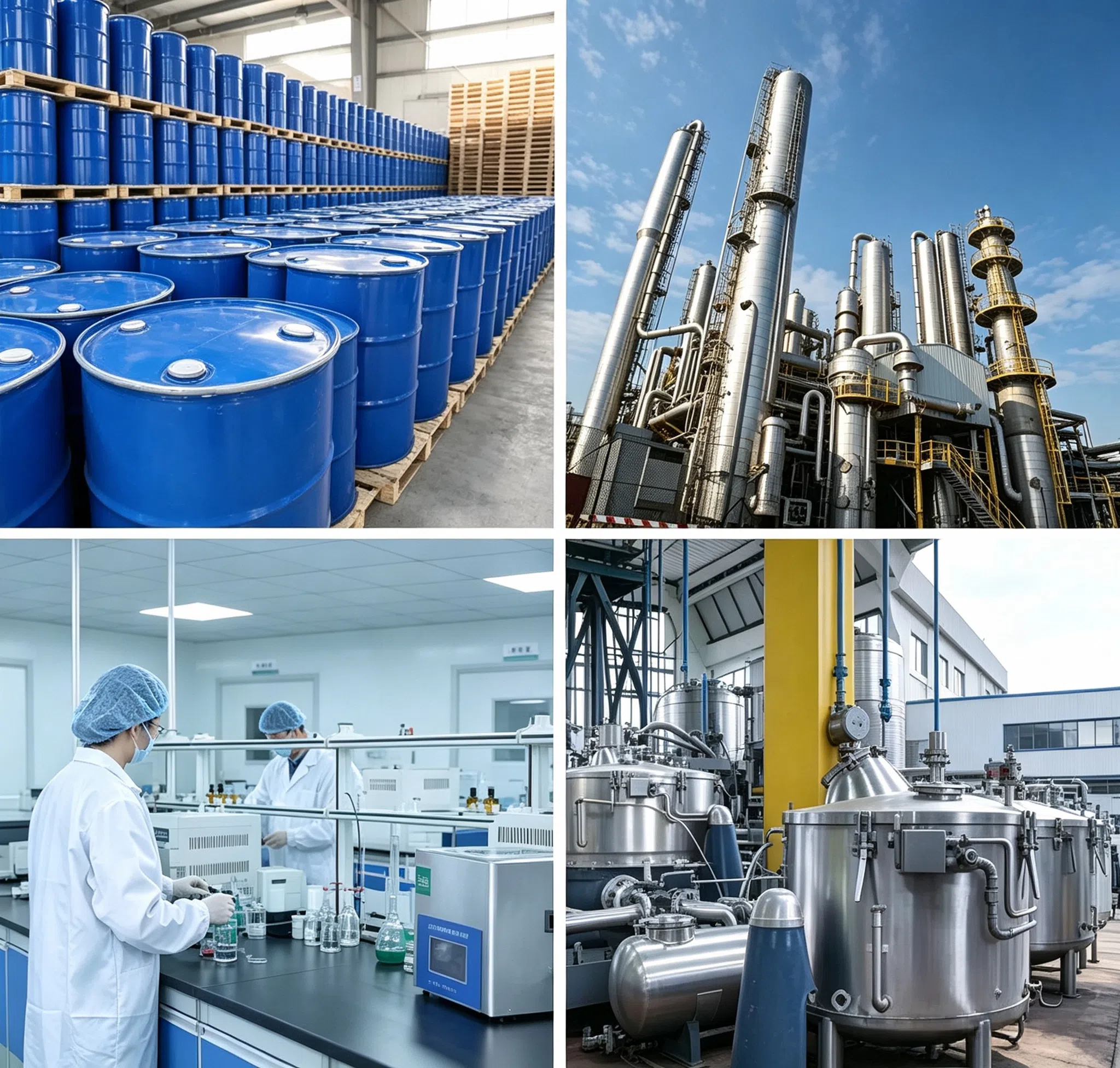
Diethyl Carbonate (DEC) is a versatile chemical intermediate widely utilized in organic synthesis and pharmaceutical manufacturing. In addition to its role as a synthesis building block, DEC functions as an efficient solvent for a variety of materials, including resins, oils, nitrocellulose, and cellulose ethers. Its excellent compatibility and solvent properties make it suitable for diverse industrial applications, particularly in coatings, polymers, and specialty chemical formulations.