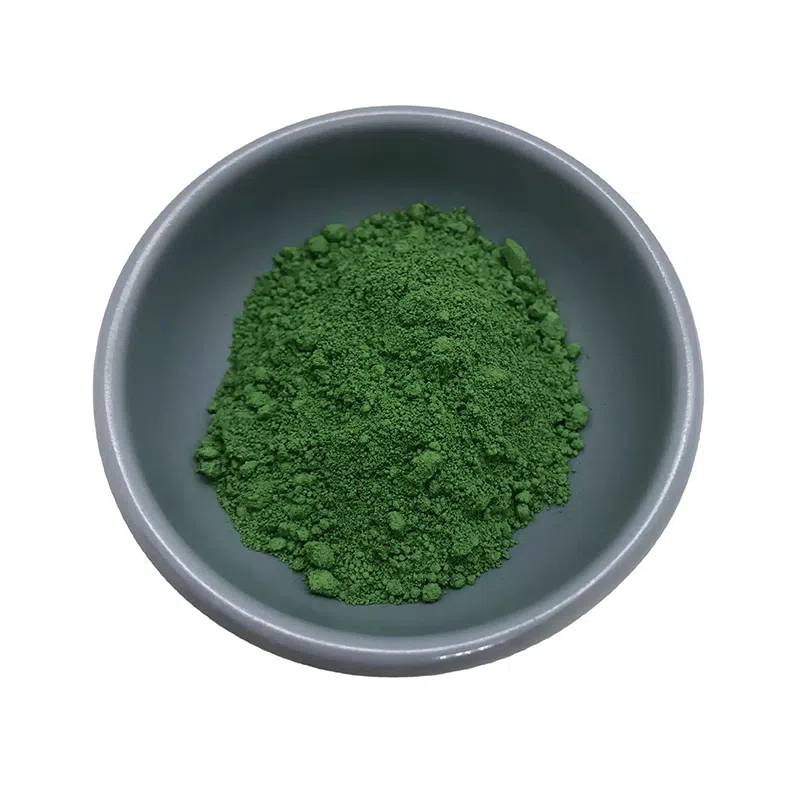
Products Description of Sodium Copper Chlorophyllin CAS#11006-34-1
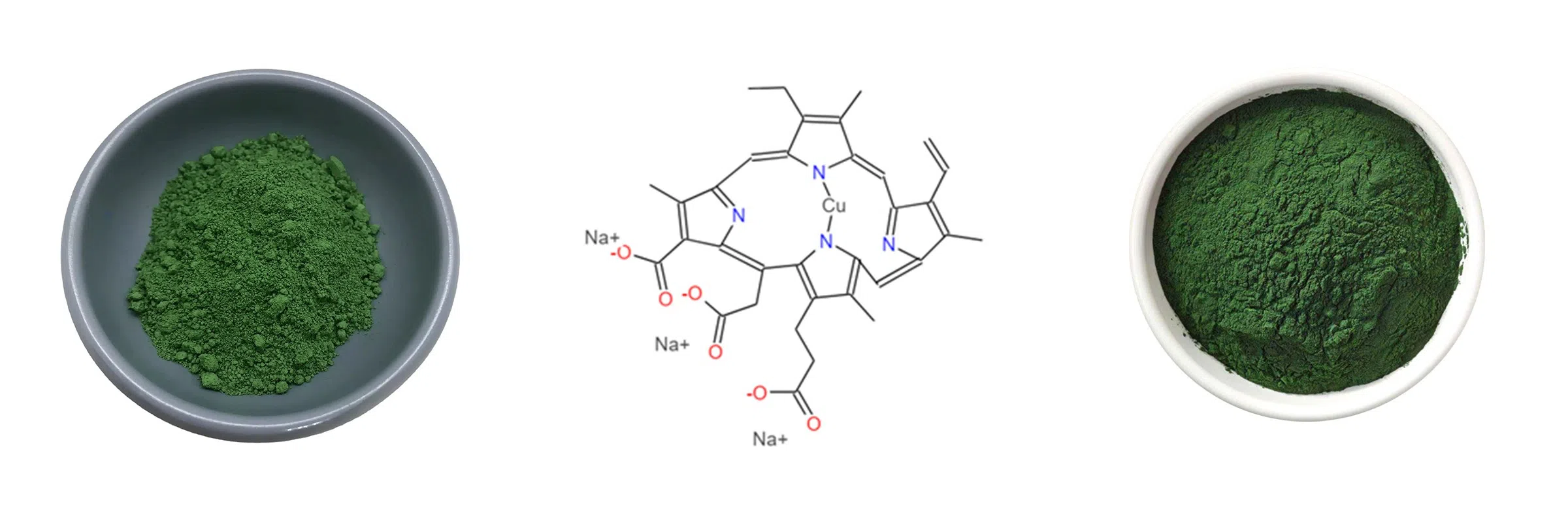
Sodium copper chlorophyllin is derived from natural green plant materials, including silkworm excrement, clover, alfalfa, bamboo, and other leafy plants. The raw materials are extracted with organic solvents such as acetone, methanol, ethanol, and petroleum ether. During the production process, the central magnesium ion in chlorophyll is replaced by a copper ion, followed by alkaline saponification to remove the methyl and phytol groups. These groups are converted into carboxyl groups, resulting in the formation of a disodium salt. Through this process, sodium copper chlorophyllin is classified as a semi-synthetic pigment. Other chlorophyll-derived pigments with similar structures and production processes include sodium iron chlorophyllin and sodium zinc chlorophyllin.
Chlorophyllin Chemical Properties
| Melting point | >300°C |
| storage temp. | Keep in dark place,Inert atmosphere,2-8°C |
| solubility | DMSO (Slightly), Methanol (Very Slightly) |
| form | Solid |
| color | Dark Green to Black |
| Water Solubility | Soluble in water. |
| Exposure limits | ACGIH: TWA 1 mg/m3 |
| NIOSH: IDLH 100 mg/m3; TWA 1 mg/m3 | |
| LogP | 2.170 (est) |
| EPA Substance Registry System | Cuprate(3-), [(7S,8S)-3-carboxy-5-(carboxymethyl)-13-ethenyl-18-ethyl-7,8-dihydro-2,8,12,17-tetramethyl-21H,23H-porphine-7-propanoato(5-)-.kappa.N21,.kappa.N22,.kappa.N23,.kappa.N24]-, trisodium, (SP-4-2)- (11006-34-1) |
Safety Information
| Risk Statements | 62 |
| Safety Statements | 22-24/25 |
| WGK Germany | 2 |
| RTECS | GS2168866 |
| TSCA | Yes |
| HS Code | 32129000 |
| Toxicity | mouse,LD50,intraperitoneal,190mg/kg (190mg/kg),Journal of the American Pharmaceutical Association, Scientific Edition. Vol. 43, Pg. 722, 1954. |
Product Application of Sodium Copper Chlorophyllin CAS#11006-34-1
Liver Protection:
Sodium copper chlorophyllin has notable antioxidant properties that may help protect liver cells against free-radical damage and oxidative stress, thereby reducing oxidative burden on the liver. It may also support the activity of hepatic reticuloendothelial cells, contribute to the recovery of liver function, and improve the resilience of liver cells.
Support for Leukopenia and Anemia:
Leukopenia and anemia can result from various underlying factors and generally require appropriate diagnosis and targeted treatment. Sodium copper chlorophyllin has been investigated for its potential to support the improvement of these conditions, with some available clinical data reporting an efficacy rate of 80% or above.
Support for Ulcer and Wound Healing:
Sodium copper chlorophyllin can be absorbed relatively quickly by the body and may support cellular metabolism, potentially promoting tissue repair and recovery. These properties make it a potential supportive ingredient in applications related to wound and ulcer healing.
Potential Antimutagenic Properties:
Sodium copper chlorophyllin has demonstrated the ability to inhibit the activity of certain mutagenic substances, including benzo[a]pyrene. It may also help support cellular activity and macrophage phagocytic function, contributing to the body's natural defense against mutagenic stress.