
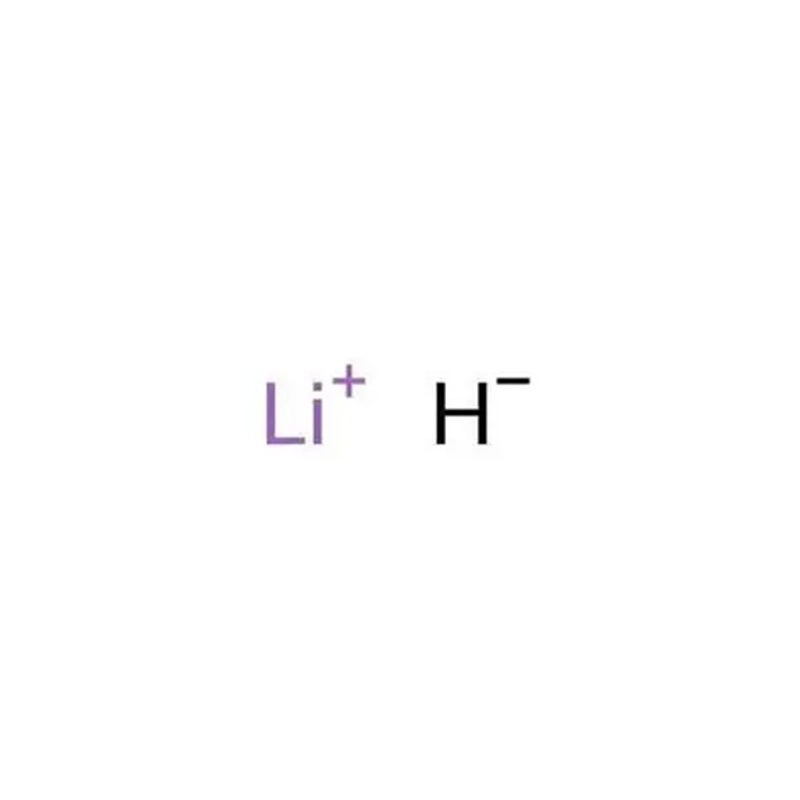
Products Description of Lithium Hydride CAS#7580-67-8
Lithium hydride (LiH), also referred to as lithium monohydride, is an inorganic lithium compound typically supplied as a white crystalline powder. It is insoluble in benzene and toluene but exhibits solubility in ether. Owing to its distinctive chemical characteristics and strong reactivity, lithium hydride is used in a range of specialized applications. It serves as an effective drying agent and reducing agent, and is also utilized as a condensation reagent in organic synthesis. In addition, its unique properties make it suitable for certain nuclear technology and radiation-protection applications.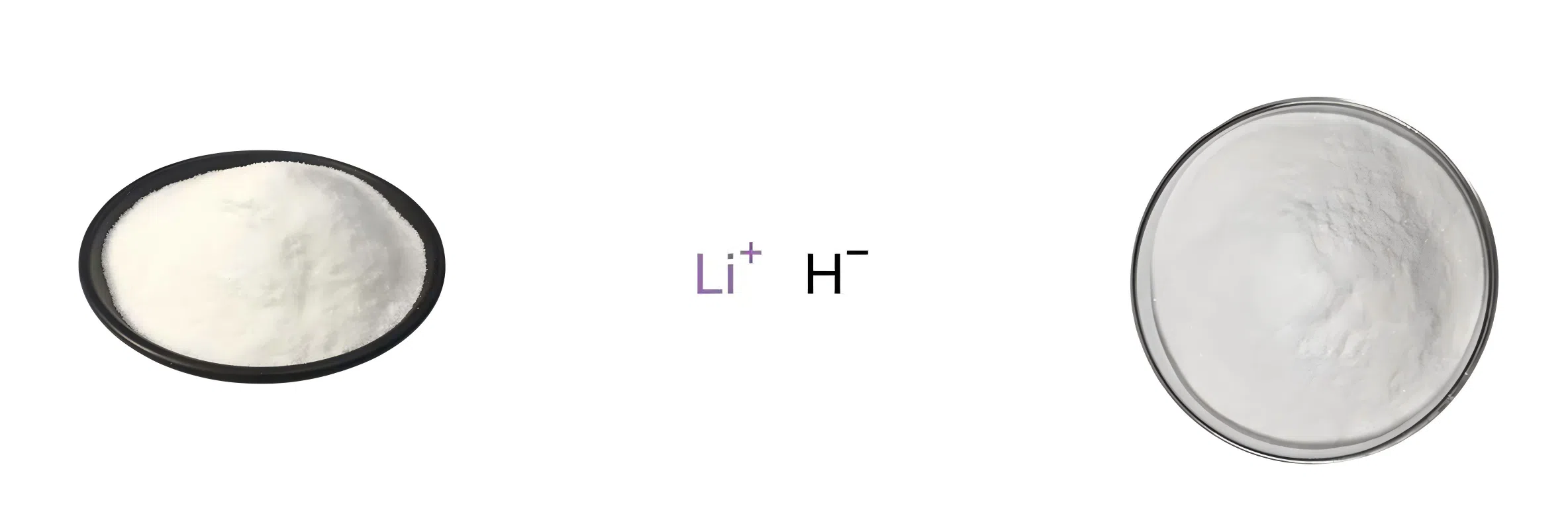
Lithium hydride Chemical Properties
| Melting point | 680 °C(lit.) |
| density | 0.82 g/mL at 25 °C(lit.) |
| storage temp. | Store below +30°C. |
| solubility | Slightly soluble in dimethylformamide. Insoluble in acetone, benzene and toluene. |
| form | powder |
| color | White to gray |
| PH | >7 (21g/l, H2O, 20℃) |
| Odor | odorless |
| Water Solubility | reacts |
| Sensitive | Air & Moisture Sensitive |
| Merck | 145533 |
| Exposure limits | TLV-TWA 0.025 mg/m3 (ACGIH). |
| InChI | InChI=1S/Li.H |
| InChIKey | SIAPCJWMELPYOE-UHFFFAOYSA-N |
| SMILES | [LiH] |
| CAS DataBase Reference | 7580-67-8(CAS DataBase Reference) |
| NIST Chemistry Reference | Lithium hydride(7580-67-8) |
| EPA Substance Registry System | Lithium hydride (7580-67-8) |
| Hazard Codes | F,C,T |
| Risk Statements | 14-34-25-14/15 |
| Safety Statements | 16-26-27-36/37/39-7/8-45-25 |
| RIDADR | UN 1414 4.3/PG 1 |
| WGK Germany | 2 |
| RTECS | OJ6300000 |
| F | 10 |
| TSCA | Yes |
| HazardClass | 4.3 |
| PackingGroup | I |
| HS Code | 28500090 |
| Hazardous Substances Data | 7580-67-8(Hazardous Substances Data) |
| Toxicity | LD50 orally in Rabbit: 78 mg/kg |
| IDLA | 0.5 mg/m3 |
Product Application of Lithium Hydride CAS#7580-67-8
Lithium hydride (LiH) is widely employed in organic synthesis as a versatile reagent, serving as a condensation agent, reducing agent, alkylating reagent, and drying agent. In addition to its synthetic applications, lithium hydride has attracted interest as a hydrogen-storage material because of its high hydrogen content and favorable hydrogen storage capacity.