Products Description of Monoethanolamine CAS#141-43-5
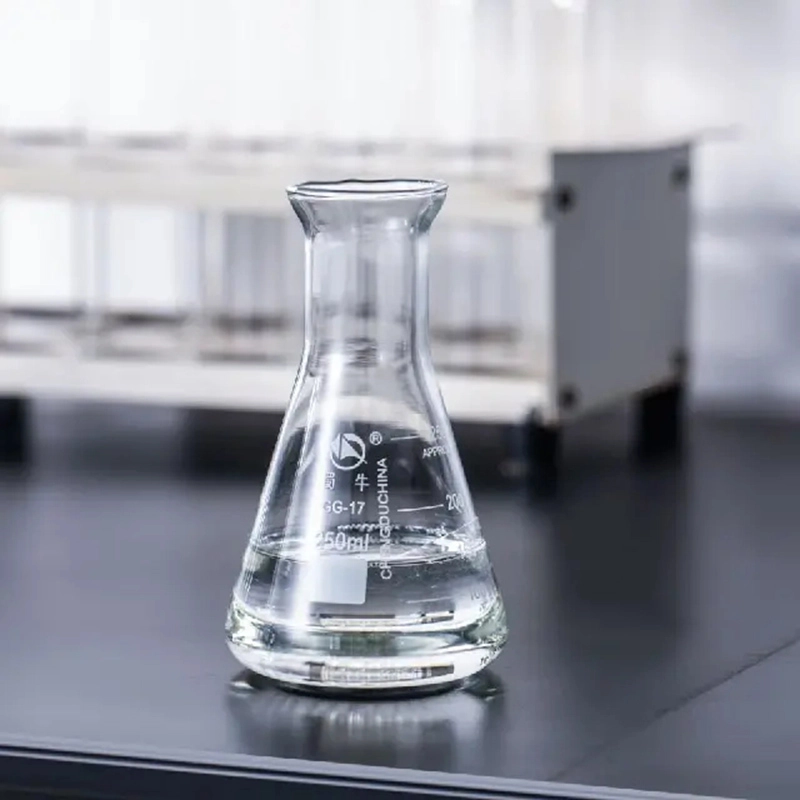
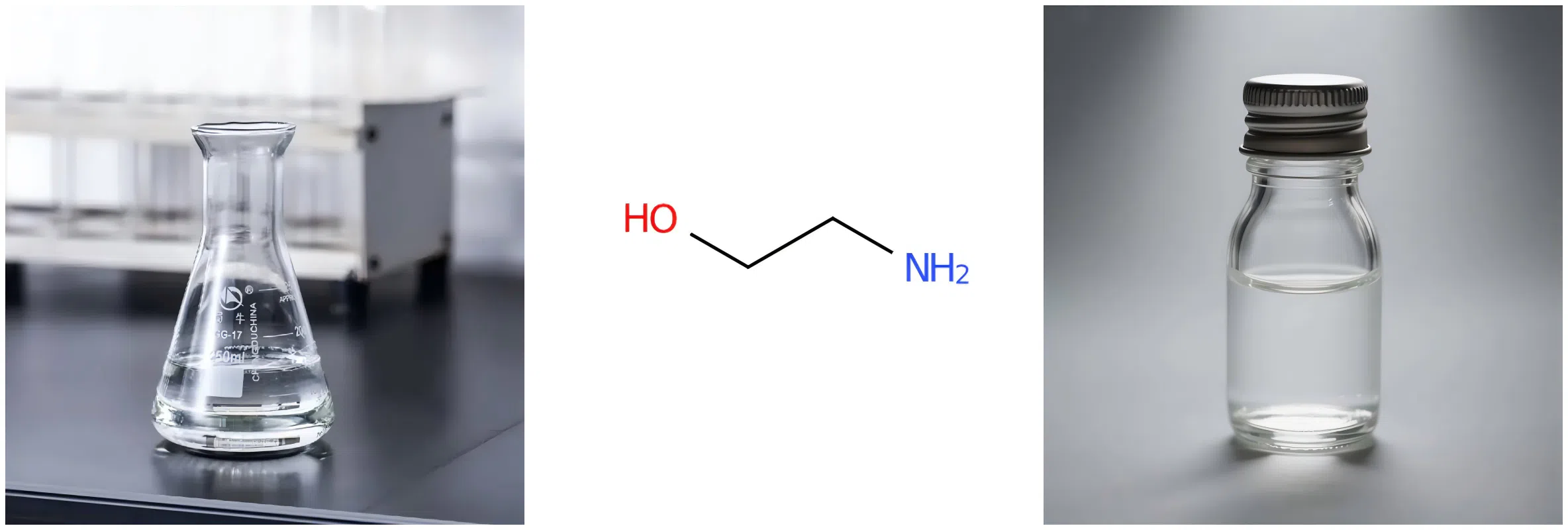
Monoethanolamine (MEA), also referred to as aminoethanol or 2-aminoethanol, is an organic compound with the molecular formula HOCH₂CH₂NH₂ and a molecular weight of 61.08 g/mol. It is typically found as a colorless, viscous liquid with strong hygroscopicity and a mild ammonia-like odor. Monoethanolamine has a melting point of approximately 10.3°C and a boiling point of around 170.8°C, with a refractive index of 1.4539. It is completely miscible with water, methanol, and acetone, while showing limited solubility in benzene and ether and only slight solubility in n-pentane.
Owing to its versatile chemical properties, Monoethanolamine has a broad range of industrial applications. It is commonly used in the manufacture of synthetic resins and rubber, where it may serve as a plasticizer, vulcanizing agent, accelerator, or foaming agent. In addition, MEA is an important chemical intermediate for producing pesticides, pharmaceuticals, dyes, and other specialty chemical products, making it valuable across various chemical manufacturing processes.
Monoethanolamine Chemical Properties
Melting point | 10-11 °C(lit.) |
Boiling point | 170 °C(lit.) |
density | 1.012 g/mL at 25 °C(lit.) |
vapor density | 2.1 (vs air) |
vapor pressure | 0.2 mm Hg ( 20 °C) |
refractive index | n20/D 1.454(lit.) |
Fp | 200 °F |
storage temp. | Store at +15°C to +25°C. |
solubility | Soluble in benzene, ether, carbon tetrachloride. |
pka | 9.5(at 25℃) |
form | Liquid |
color | APHA: ≤15 |
Specific Gravity | 1.012 |
Odor | ammoniacal odor |
Relative polarity | 0.651 |
PH | 12.1 (100g/l, H2O, 20℃) |
explosive limit | 3.4-27%(V) |
Water Solubility | miscible |
Sensitive | Air Sensitive & Hygroscopic |
Merck | 143727 |
BRN | 505944 |
Henry's Law Constant | 1.61(x 10-10 atm?m3/mol) at 20 °C (Bone et al., 1983) |
Dielectric constant | 31.94 |
Exposure limits | TLV-TWA 3 ppm (~7.5 mg/m3) (ACGIH, MSHA, and OSHA); TLV-STEL 6 ppm (~15 mg/m3) (ACGIH); IDLH 1000 ppm (NIOSH). |
Stability: | Stable. Flammable; incompatible with strong oxidizing agents, strong acids. Hygroscopic. |
InChIKey | HZAXFHJVJLSVMW-UHFFFAOYSA-N |
LogP | -2.3--1.91 at 25℃ |
CAS DataBase Reference | 141-43-5(CAS DataBase Reference) |
NIST Chemistry Reference | Ethanolamine(141-43-5) |
EPA Substance Registry System | Ethanolamine (141-43-5) |
Hazard Codes | T,C |
Risk Statements | 20/21/22-34-39/23/24/25-23/24/25-10-52/53 |
Safety Statements | 26-36/37/39-45-61 |
RIDADR | UN 2924 3/PG 3 |
WGK Germany | 1 |
RTECS | KJ5775000 |
F | 39744 |
Autoignition Temperature | 410 °C |
TSCA | Yes |
HazardClass | 8 |
PackingGroup | III |
HS Code | 29221100 |
Hazardous Substances Data | 141-43-5(Hazardous Substances Data) |
Toxicity | LD50 orally in rats: 10.20 g/kg (Smyth) |
IDLA | 30 ppm |

Product Application of Monoethanolamine CAS#141-43-5
Monoethanolamine is an important building block in the synthesis of a variety of pharmaceutical compounds and biologically active agents. It can be employed in the preparation of substituted carboxylic acid derivatives with potential antitumor properties. Furthermore, monoethanolamine is used as a synthetic precursor in the development of aminoquinolone derivatives that have demonstrated antiplasmodial activity, making it useful in pharmaceutical research and medicinal chemistry.