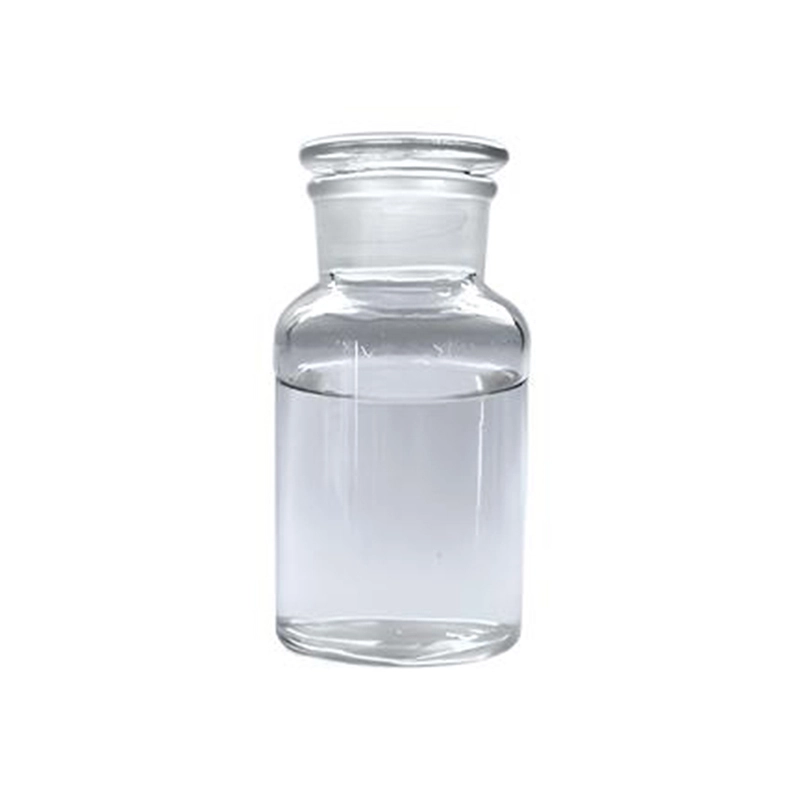
Propylene Carbonate CAS#108-32-7
Cyclic carbonates include five-, six-, and seven-membered ring structures, as well as macrocyclic carbonates with larger ring systems. Among these, ethylene carbonate (EC) and propylene carbonate (PC) are among the most commercially important and widely used compounds.
Ethylene Carbonate is a highly polar solvent characterized by excellent solvency, a high boiling point, and good thermal stability. It also serves as a valuable feedstock for surfactant manufacturing. Due to its versatile chemical and physical properties, EC is widely applied in plastics, textile printing and dyeing, polymer synthesis, gas separation, and electrochemical technologies, making it an important material for a broad range of industrial applications.
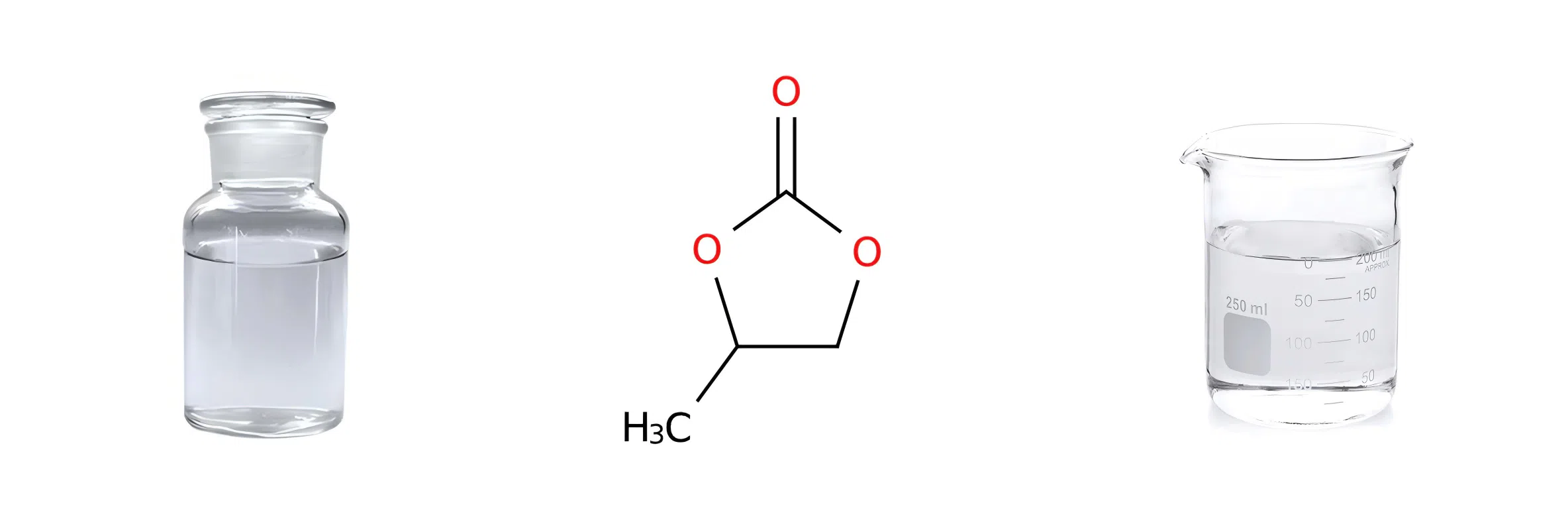
Chemical Properties
| Melting point | -55 °C (lit.) |
| Boiling point | 240 °C (lit.) |
| density | 1.204 g/mL at 25 °C (lit.) |
| vapor pressure | 0.13 mm Hg ( 20 °C) |
| refractive index | n20/D 1.421(lit.) |
| Fp | 270 °F |
| storage temp. | Store below +30°C. |
| solubility | 240g/l |
| form | Liquid |
| pka | 3.92[at 20 ℃] |
| Specific Gravity | 1.209 (20/4℃) |
| color | Clear |
| PH | 7.0 (200g/l, H2O, 20℃) |
| Relative polarity | 6 |
| Odor | odorless |
| explosive limit | 1.8-14.3%(V) |
| Water Solubility | 240 g/L (20 ºC) |
| λmax | λ: 235 nm Amax: 1.00 |
| λ: 280 nm Amax: 0.50 | |
| λ: 300 nm Amax: 0.30 | |
| λ: 350 nm Amax: 0.05 | |
| λ: 375-400 nm Amax: 0.01 | |
| BRN | 107913 |
| Henry's Law Constant | 2.9×10² mol/(m3Pa) at 25℃, Duchowicz et al. (2020) |
| Dielectric constant | 64.4(Ambient) |
| Stability: | Stable. Incompatible with strong oxidizing agents, acids, bases, reducing agents. Protect from contact with moist air or water. |
| Major Application | food and beverages |
| Cosmetics Ingredients Functions | SOLVENT |
| VISCOSITY CONTROLLING | |
| InChI | 1S/C4H6O3/c1-3-2-6-4(5)7-3/h3H,2H2,1H3 |
| InChIKey | RUOJZAUFBMNUDX-UHFFFAOYSA-N |
| SMILES | CC1COC(=O)O1 |
| LogP | -0.41 at 20℃ |
| CAS DataBase Reference | 108-32-7(CAS DataBase Reference) |
| NIST Chemistry Reference | Propylene carbonate(108-32-7) |
| EPA Substance Registry System | Propylene carbonate (108-32-7) |
Safety Information
| Hazard Codes | Xi |
| Risk Statements | 36 |
| Safety Statements | 26-37/39 |
| WGK Germany | 1 |
| RTECS | FF9650000 |
| F | 46091 |
| Autoignition Temperature | 851 °F |
| TSCA | TSCA listed |
| HS Code | 29209010 |
| Storage Class | 10 - Combustible liquids |
| Hazard Classifications | Eye Irrit. 2 |
| Hazardous Substances Data | 108-32-7(Hazardous Substances Data) |
| Toxicity | LD50 orally in Rabbit: > 5000 mg/kg LD50 dermal Rabbit > 20000 mg/kg |
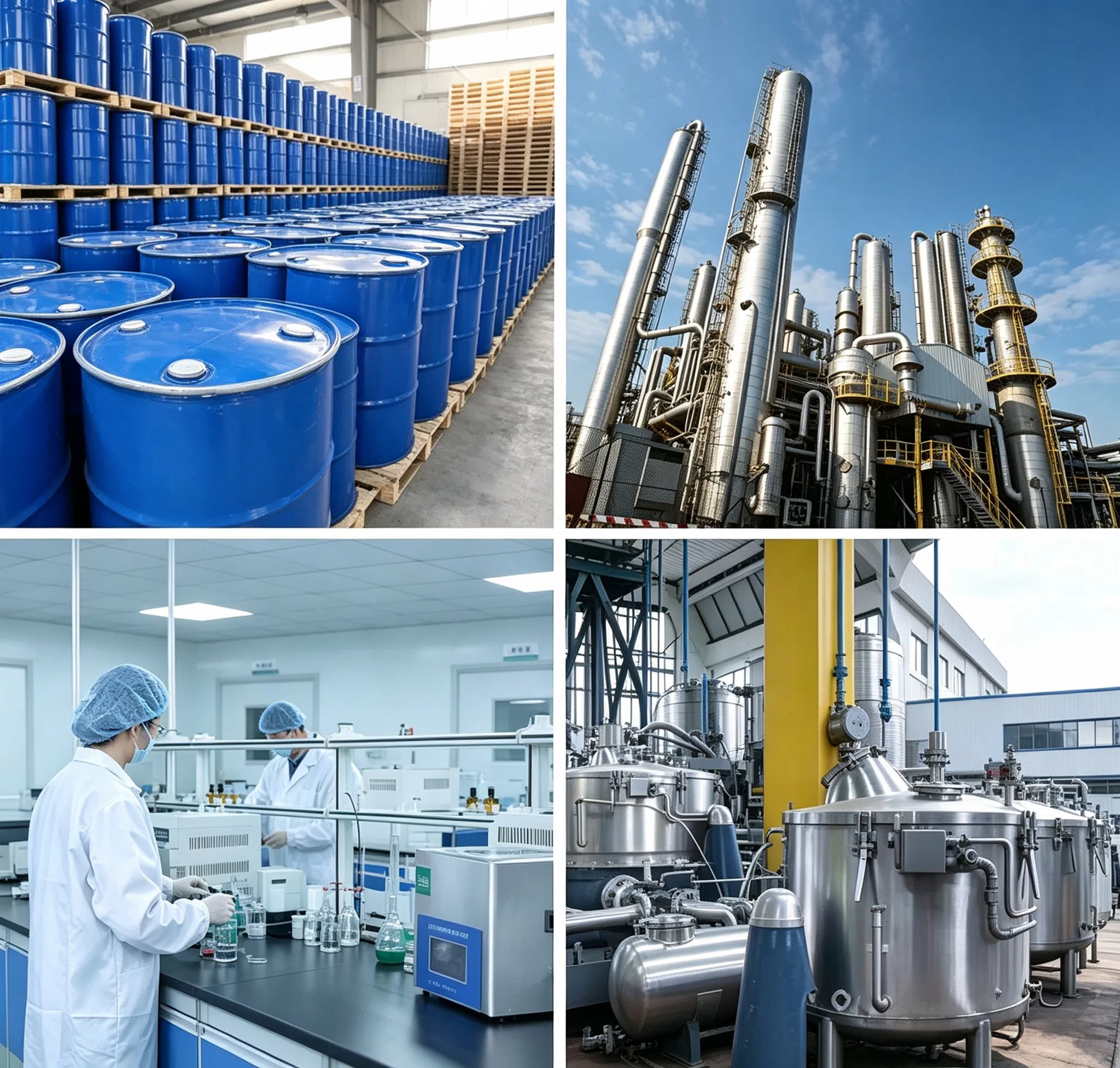
Product Application of Propylene Carbonate CAS#108-32-7
Propylene Carbonate (PC) is a versatile solvent widely used in the production and processing of synthetic fibers and various polymer-based materials. Owing to its excellent solvency and favorable chemical properties, it is also utilized as an effective extraction agent, plasticizer, and processing additive across a broad range of industrial and chemical applications.