Products Description of Diphenyl Ether CAS#101-84-8
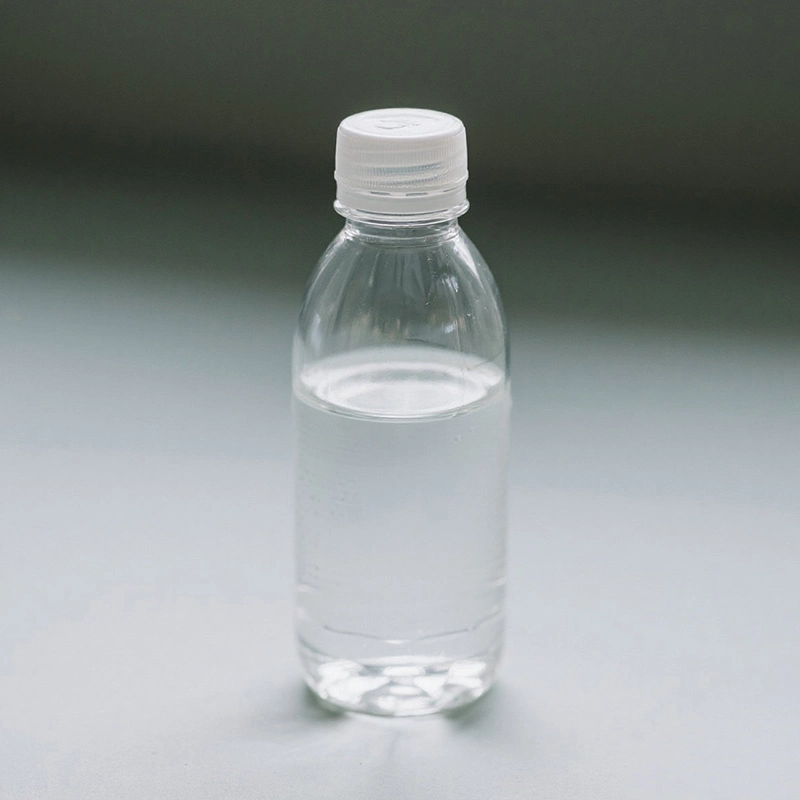
Diphenyl Ether (CAS#101-84-8) is a colorless material that appears as either a crystalline solid or a clear liquid and has a light, pleasant fragrance. It melts at approximately 81 °F (27.2 °C), becoming a transparent liquid once the temperature rises above this point. The product features a noticeable floral-green, metallic, geranium-type aroma and is not soluble in water.
This compound is commonly utilized as a heat-transfer agent because of its excellent thermal stability and low vapor pressure. It also holds considerable value in the fragrance industry, especially in soap formulations, where it aids in carrying and retaining scent components. Additionally, Diphenyl Ether is widely used as an intermediate in chemical synthesis, supporting numerous processes such as halogenation, acylation, and alkylation, which are important in producing a variety of organic substances and industrial materials.
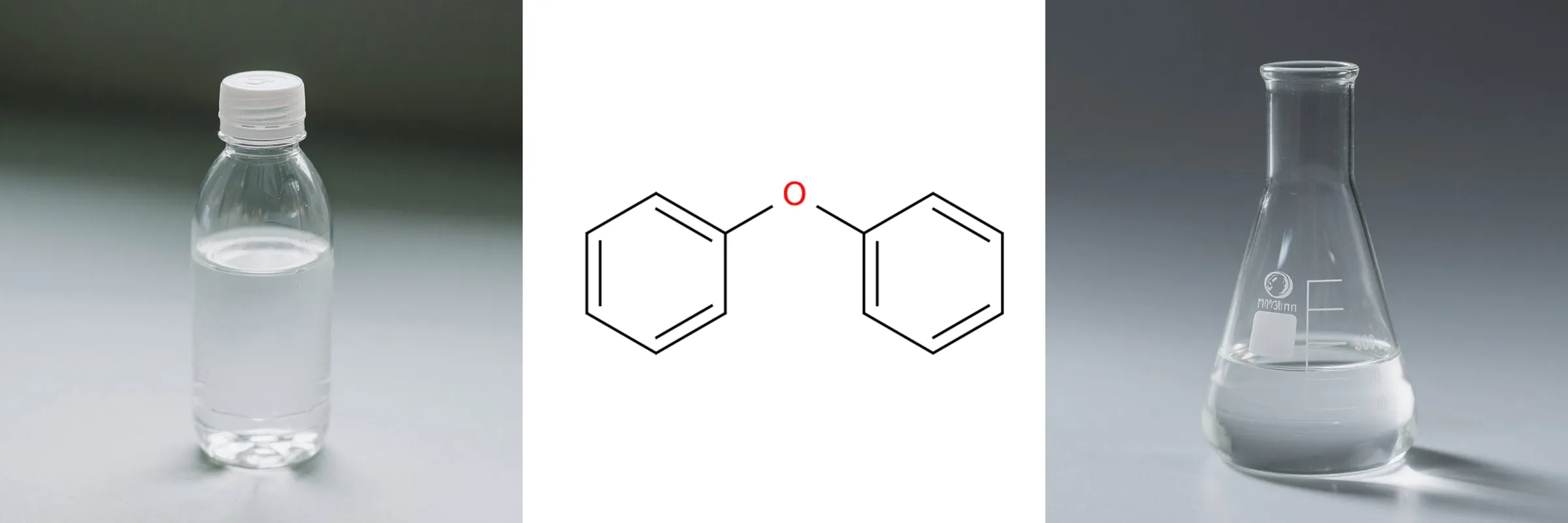
Diphenyl ether Chemical Properties
| Name | Diphenyl Ether |
| CAS No | 101-84-8 |
| Physical Form | Colorless crystalline solid or liquid |
| Melting Point | About 81 °F (27.2 °C) |
| Odor | Mild, pleasant, floral-green with metallic geranium notes |
| Solubility | Not soluble in water |
| Uses | Heat-transfer agent, fragrance and soap additive, and intermediate for organic reaction processes |
| Melting point | 26 °C |
| Boiling point | 259 °C(lit.) |
| Density | 1.073 g/mL at 25 °C(lit.) |
| Vapor density | >5.86 (25 °C, vs air) |
| Vapor pressure | <1 mm Hg ( 20 °C) |
| Refractive index | n20/D 1.579(lit.) |
| FEMA | 3667 | DIPHENYL ETHER |
| Fp | >230 °F |
| Storage temp | Store below +30°C. |
| Solubility | alcohol: soluble(lit.) |
| Form | Colorless liquid |
| Color | White or Colorless to Almost white or Almost colorless |
| Specific Gravity | 1.073 |
| Relative polarity | 2.8 |
| Odor | Weak geranium. |
| Odor Threshold | 0.1ppm |
| Odor Type | green |
| Explosive limit | 0.8-1.5%(V) |
| Water Solubility | insoluble |
| FreezingPoint | 27℃ |
| Merck | 147,288 |
| JECFA Number | 1255 |
| BRN | 1364620 |
| Henry's Law Constant | 2.13 at 20 °C (approximate - calculated from water solubility and vapor pressure) |
| Exposure limits | NIOSH REL: TWA 1 ppm (7 mg/m3), IDLH 100 ppm; OSHA PEL: TWA 1 ppm; ACGIH TLV: TWA 0.1, STEL 2 ppm (adopted). |
| Dielectric constant | 3.7(30℃) |
| InChIKey | USIUVYZYUHIAEV-UHFFFAOYSA-N |
| LogP | 4.21 at 25℃ |
| CAS DataBase Reference | 101-84-8(CAS DataBase Reference) |
| NIST Chemistry Reference | Diphenyl ether(101-84-8) |
| EPA Substance Registry System | Phenyl ether (101-84-8) |
Safety Information
| Hazard Codes | N,Xi,T |
| Risk Statements | 51/53-36/37/38-39/23/24/25-23/24/25-36/38-36 |
| Safety Statements | 60-61-57-37/39-26-45-36/37 |
| RIDADR | UN 3077 9/PG 3 |
| OEB | B |
| OEL | TWA: 1 ppm (7 mg/m3) |
| WGK Germany | 2 |
| RTECS | KN8970000 |
| Autoignition Temperature | 610 °C |
| TSCA | Yes |
| HS Code | 2909 30 10 |
| HazardClass | 9 |
| PackingGroup | III |
| Hazardous Substances Data | 101-84-8(Hazardous Substances Data) |
| Toxicity | LD50 orally in Rabbit: 2450 mg/kg LD50 dermal Rabbit > 7940 mg/kg |
| IDLA | 100 ppm |
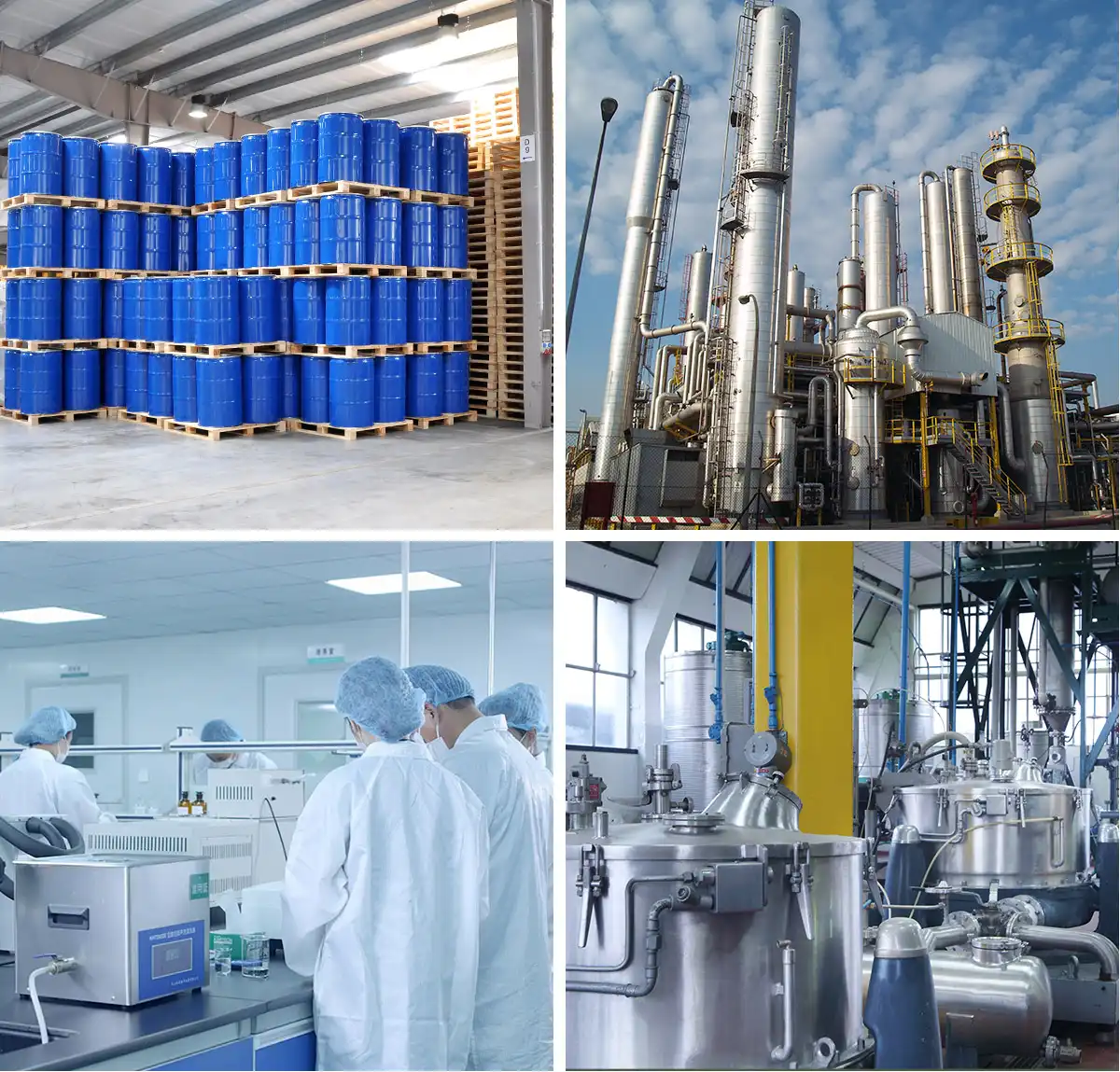
In the heat transfer fluid industry, it represents its most classic and dominant application. When blended with biphenyl at a specific ratio (73.5% diphenyl ether + 26.5% biphenyl), it forms the well-known eutectic heat transfer medium Dowtherm A. This mixture features excellent thermal oxidation resistance and stable performance under high temperature, with a broad usable temperature range both in liquid and vapor phases. It is extensively deployed in high-temperature heating systems for chemical plants, pharmaceutical production lines, concentrated solar power generation, resin synthesis and petrochemical processing, enabling uniform and precise temperature control for continuous industrial production.
In the fragrance, flavor and daily chemical fields, diphenyl ether delivers long-lasting geranium, rose and powdery green notes, commonly known as artificial geranium oil in perfume formulation. It acts as a fragrance fixative and blending ingredient for soap, laundry detergent, shampoo, body wash and household cleaning products. It can stabilize floral aroma systems and reduce fragrance volatilization. It is also approved as a food flavoring agent under relevant food additive standards, applicable in food flavor formulations to enrich natural floral and fruity aroma layers.
For textile and polyester manufacturing, diphenyl ether functions as a high-boiling dye carrier and processing aid. It promotes the penetration and diffusion of disperse dyes inside polyester fibers during high-temperature dyeing, improving dye uptake, leveling effect and color fastness, and minimizing color speckles and uneven dyeing defects. Meanwhile, it works as a processing auxiliary in polyester polymerization to optimize melt fluidity and product forming performance.
In organic synthesis and fine chemical production, diphenyl ether is a vital aromatic intermediate and high-temperature inert solvent. It is the starting raw material to synthesize surfactants, high-temperature lubricants, grease additives and halogenated diphenyl ether derivatives. Its brominated derivatives can be used as flame retardants for plastics, rubber, electronic appliance housings and textile materials. It can also participate in the Ferrario reaction to prepare phenoxathiin monomers for polyimide and polyamide high-performance polymer materials. In high-temperature organic synthesis reactions, it can be used as a high-boiling reaction solvent, offering stable reaction environment without interfering with target synthetic routes.