
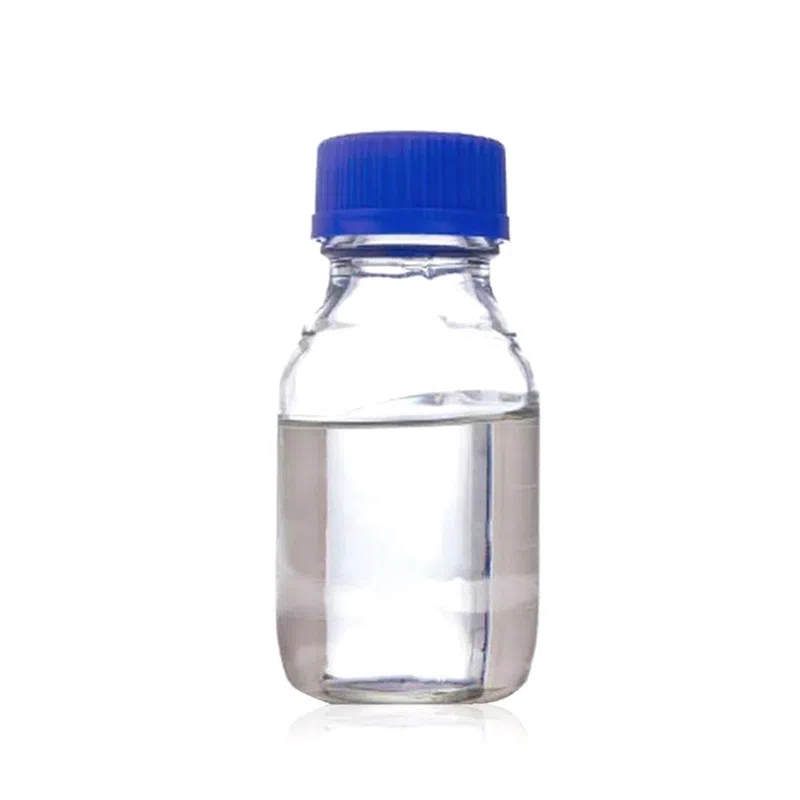
Products Description of Diethyl Sebacate CAS#110-40-7
A colorless to slightly yellow liquid with a characteristic wine-, fruity-, and melon-like aroma. Its odor profile presents soft wine notes blended with ripe fruity undertones and distinct melon fragrance, and the aroma remains stable under normal ambient conditions without rapid degradation or off‑odor generation. It has a boiling point of approximately 302°C and a melting point of 1–3°C. Owing to its relatively high boiling point, this substance shows low volatility at room temperature, while its low melting point means it stays in liquid form under typical indoor environments and will gradually solidify only when the temperature drops below 1–3°C. The compound is insoluble in water, showing almost no dissolution and obvious phase separation when mixed with aqueous systems. However, it is readily miscible with ethanol, ether, most non‑volatile oils, and a wide range of other organic solvents. It can form homogeneous, single‑phase mixtures with these organic media at normal temperatures without stratification or precipitation. This favorable solubility characteristic enables easy formulation blending in oil‑based, alcohol‑borne and solvent‑based systems, which greatly expands its usability in flavor, fragrance and industrial additive applications.
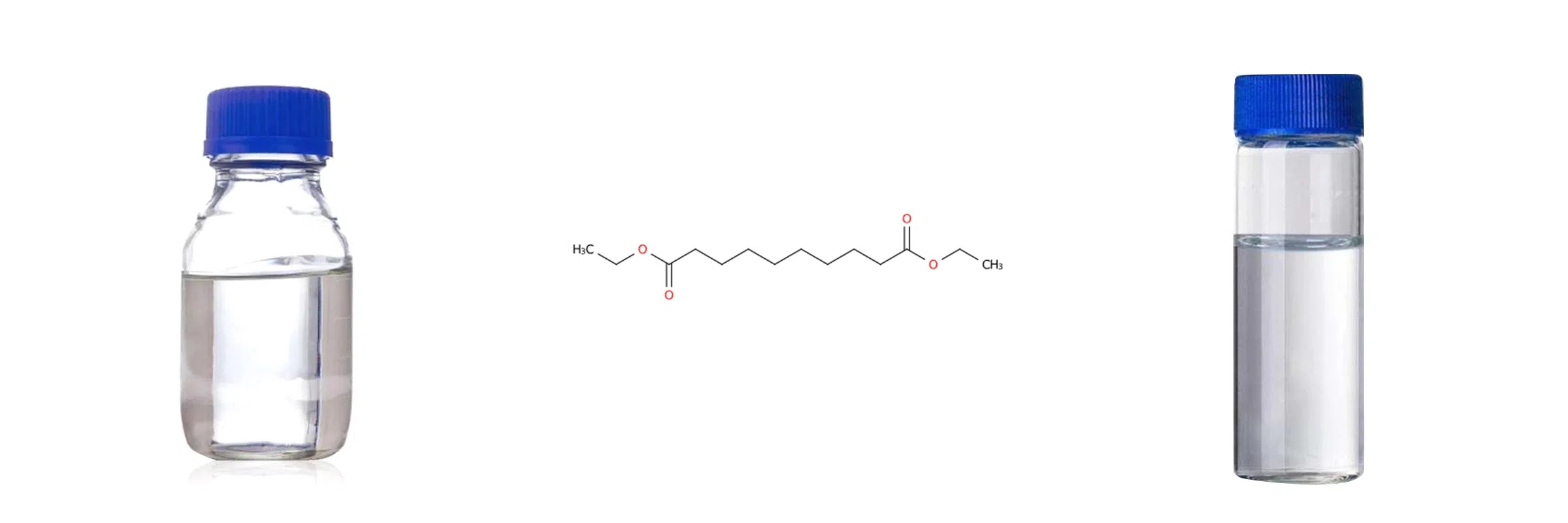
Diethyl sebacate Chemical Properties
| Melting point | 1-2 °C (lit.) |
| Boiling point | 312 °C (lit.) |
| Density | 0.963 g/mL at 25 °C (lit.) |
| Vapor pressure | 0.018Pa at 25℃ |
| Refractive index | n20/D 1.436(lit.) |
| FEMA | 2376 | DIETHYL SEBACATE |
| Fp | >230 °F |
| Storage temp. | Store below +30°C. |
| Solubility | <0.1g/l |
| Form | liquid |
| Color | colorless to pale yellow |
| Odor | mild melon fruity quince wine |
| Odor Type | fruity |
| Water Solubility | slightly soluble |
| JECFA Number | 624 |
| Merck | 148,415 |
| BRN | 1790779 |
| Dielectric constant | 5.0(30℃) |
| LogP | 4.64 at 20℃ |
| CAS DataBase Reference | 110-40-7(CAS DataBase Reference) |
| NIST Chemistry Reference | Decanedioic acid, diethyl ester(110-40-7) |
| EPA Substance Registry System | Decanedioic acid, diethyl ester (110-40-7) |
Safety Information
| Hazard Codes | Xi |
| Risk Statements | 38 |
| Safety Statements | 36-24/25 |
| WGK Germany | 2 |
| RTECS | VS1180000 |
| HS Code | 29171390 |
| Toxicity | LD50 orally in Rabbit: 14470 mg/kg |

Product Application of Diethyl Sebacate CAS#110-40-7
According to GB 2760-96, it is approved for temporary use as a food flavoring agent, also registered as FEMA 2376 for flavor formulation. Featuring a pleasant fruity, melon and wine-like aroma profile, it is mainly used in the formulation of berry-type fragrances such as grape and pear flavors, and acts as an excellent solvent and carrier for fruit flavors. Thanks to its good solubilizing capacity and low volatility, it can evenly disperse different aroma components, stabilize the fragrance system, slow down aroma loss during production and storage, and deliver full, natural fruity notes in beverages, candies, baked goods and other flavored food systems.
In addition, it has applications in the pharmaceutical industry. It can serve as a pharmaceutical intermediate, film-coating plasticizer and functional excipient in oral solid preparations and transdermal drug delivery systems. It helps improve the flexibility of tablet coating films, reduces brittleness of coating layers, and can also work as a penetration enhancer in transdermal patches to assist active ingredients in permeating skin barriers. With low toxicity and good biocompatibility, it is compatible with most commonly used pharmaceutical raw materials.
Beyond flavor and pharmaceutical fields, diethyl sebacate also boasts broad industrial value. It functions as a high-performance low-temperature plasticizer for nitrocellulose, cellulose acetate butyrate, vinyl resins and synthetic rubbers, effectively improving material flexibility and cold resistance without sacrificing mechanical properties. It can also be adopted as a solvent and synthetic intermediate in organic synthesis, coatings, inks and pigment formulations. Moreover, its mild emollient property enables its use in cosmetic and personal care formulas. Owing to its versatile performance and excellent compatibility with various oil-soluble substances, diethyl sebacate has become a multi-functional ester additive across flavor, pharmaceutical, polymer and fine chemical sectors.